PCM Heat Storage
This project presents the design, fabrication, and experimental analysis of a latent heat thermal energy storage (LHTES) unit using a spiral finned tube heat exchanger integrated with paraffin-based phase change material (RT-50). The system was developed to address the performance limitations associated with conventional thermal storage by enhancing heat transfer through optimized fin geometry and controlled operating conditions. Key performance metrics such as temperature distribution, melt fraction, charging time, and energy storage capacity were evaluated under varying inlet temperatures and flow rates of the heat transfer fluid. The experimental findings provide critical insights into the thermal behavior and efficiency of PCM-based storage systems for sustainable energy applications.
My Final Year B.Tech Project – Experimental Study on a Spiral Finned Tube Thermal Energy Storage Unit
As part of my final year Mechanical Engineering project at Amal Jyothi College of Engineering, I worked with a group of three classmates on something that really excited all of us — thermal energy storage using phase change materials (PCMs). The project was aimed at tackling a big problem in the renewable energy sector: how to store energy efficiently when the source (like solar) isn’t always available.
Why This Topic?
Solar energy is amazing, no doubt. But the problem is — it doesn’t shine 24/7. So we need a smart way to store that heat energy when the sun’s out, and use it later when it’s not. That’s where PCMs come in. They store energy during their phase change (like when wax melts), and release it when they solidify again. It's a compact and efficient solution, and we wanted to explore how to make it work better.
What We Tried to Do
Our main goals were:
-
To experimentally analyse a thermal energy storage system using latent heat.
-
To see how fin design, material choice, and operating conditions (like flow rate and temperature) affect its performance.
Design & Fabrication Highlights
We designed a spiral-finned copper tube heat exchanger, which was placed inside a GI pipe. The space was filled with RT-50 paraffin wax—a PCM that melts around 50°C and has good thermal stability.
Key parts of the setup:
-
Copper spiral fins: To increase heat transfer area.
-
GI outer shell: Held the PCM in place.
-
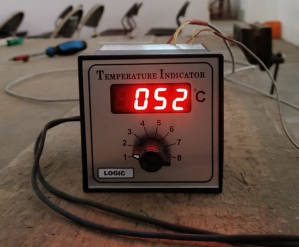
Thermocouples: To track temperature at multiple points.
-
Pump and heater: For circulating hot water and simulating solar heat.
How We Tested It
We ran tests by circulating hot water through the copper tube, and measured how the PCM melted and stored heat. We tracked:
-
How quickly the PCM heated up
-
How much of it melted (melt fraction)
-
Total charging time
-
How much energy was stored
We also ran experiments with two different inlet temperatures
(65°C and 75°C) and varied the water flow rate to see what difference
it made.
What We Found
-
At 75°C inlet, the PCM reached about 65°C in 185 minutes.
-
At 65°C inlet, the same temperature took around 335 minutes — so, obviously, higher inlet temp = faster charging.
-
Flow rate and temperature had a huge impact on performance.
-
Maximum energy stored was around 2.4 MJ, mostly as latent heat.
-
And interestingly, natural convection inside the PCM really helped speed up the melting process.
Final Takeaway
This project taught me so much—not just about theory but how it actually works in real life. From designing and fabricating the setup to running experiments and collecting data, it was a complete hands-on experience.
Skills I Picked Up:
-
Thermal system design & modeling
-
Experimental setup and instrumentation
-
Working with thermocouples, data logging, and parametric analysis
-
Analytical thinking and teamwork under real project pressure
To be honest, this project helped me realise how important thermal energy storage is for the future of clean energy. And it made me even more interested in sustainable technologies and practical engineering solutions.
Let me know if you’d like this turned into a portfolio-style PDF, résumé bullet points, or a short LinkedIn post version!